Interior Design Horizontal Banner: A Strategic Layout for Modern Branding
In the competitive landscape of visual communication, the choice of layout often dictates the effectiveness of a message before a single word is read. The Interior Design Horizontal Banner has emerged as a versatile and powerful format, particularly for industries where aesthetics and spatial organization are paramount. Unlike vertical formats that prioritize scrolling or stacking information, this horizontal approach leverages width to create a cinematic flow, guiding the viewer's eye across a narrative arc. For professionals in architecture, real estate, furniture retail, and corporate communications, understanding the nuances of this specific template type is essential for creating high-impact materials.
This article explores the distinct characteristics of the Interior Design Horizontal Banner, comparing it with alternative formats to help you determine when this layout is the optimal choice for your project. We will examine its structural strengths, the tradeoffs involved in its implementation, and how modern design elements—such as beige tones and vector graphics—enhance its utility in annual reports, catalogs, and marketing brochures.
Defining the Interior Design Horizontal Banner Format
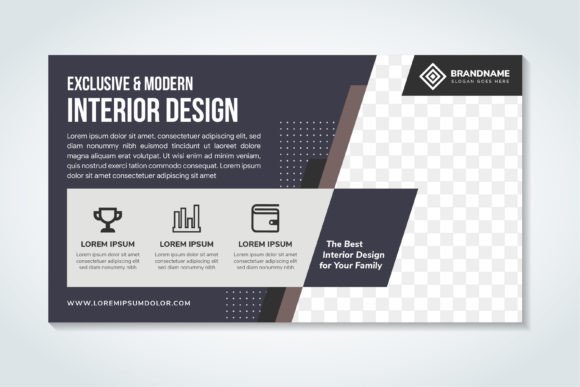
The Interior Design Horizontal Banner is not merely a wide image; it is a structured composition designed to balance text, photography, and negative space within a panoramic frame. Its primary distinction lies in its ability to showcase environments without fragmentation. In interior design, context is everything. A vertical banner might crop a room, showing only a sofa or a wall, whereas a horizontal layout captures the relationship between furniture, lighting, and architectural lines.
This format typically features a clean, organized structure where headers and footers run parallel to the top and bottom edges, leaving the central "viewport" open for high-resolution imagery. The inclusion of modern beige elements, as seen in contemporary templates, serves a functional purpose: it provides a neutral, sophisticated backdrop that allows colorful product photography or bold typography to stand out without visual competition. When executed correctly, this layout transforms a simple advertisement into a cohesive story about lifestyle and space.
Comparative Analysis: Horizontal vs. Vertical and Square Formats
When evaluating design resources, it is crucial to understand how the horizontal banner compares to other standard orientations. Each format serves a different psychological function and fits distinct distribution channels.
Spatial Narrative vs. Information Density
Vertical layouts, common in mobile-first social media feeds like Instagram Stories or Pinterest pins, are excellent for quick, punchy information. They force the eye down, making them ideal for step-by-step guides or detailed product lists. However, they struggle to convey the breadth of an interior space. The Interior Design Horizontal Banner, by contrast, excels at spatial narrative. It mimics the human field of vision, making it superior for showcasing living rooms, office landscapes, or exterior facades. If your goal is to sell the feeling of a space rather than just a piece of furniture, the horizontal orientation is often the more persuasive tool.
Digital Flexibility vs. Print Tradition
Square formats offer a middle ground, providing equal weight to height and width. While effective for profile grids, they can feel cramped when displaying wide-angle interior shots. The horizontal banner bridges the gap between digital web headers and traditional print media. A well-designed horizontal template can be easily adapted from a website hero section to a printed annual report cover or a catalog spread. This dual-purpose capability makes it a cost-effective resource compared to creating separate assets for screen and paper.
Evaluating Strengths and Tradeoffs
Adopting a specialized template for an Interior Design Horizontal Banner offers significant advantages, but it also presents specific limitations that designers must navigate.
Strengths: Professionalism and Scalability
One of the most compelling arguments for using a high-quality, vector-based horizontal template is scalability. Because the graphics are 100% vector, the design remains crisp at any size, from a small thumbnail on a mobile device to a large-format poster in a showroom. The "well-organized" nature of these files, with editable text, shapes, and colors, reduces production time significantly. Instead of building a layout from scratch, a designer can focus on content strategy and image selection.
Furthermore, the aesthetic consistency provided by pre-set color palettes—such as the modern beige tones mentioned in current design trends—ensures brand alignment. In corporate settings, such as annual reports or company catalogs, maintaining a uniform look across multiple pages is vital. A horizontal brochure template ensures that every page feels part of a unified whole, reinforcing brand identity.
Tradeoffs: Content Constraints and Platform Fit
The primary limitation of the horizontal format is its incompatibility with certain mobile viewing habits. On smartphones held vertically, a wide banner may require the user to pinch-and-zoom or scroll horizontally, which can disrupt the user experience if not implemented carefully. Additionally, the horizontal constraint limits the amount of body text that can be included without cluttering the design. This format is best suited for headlines, key selling points, and strong visuals, rather than dense informational paragraphs.
Designers must also consider the aspect ratio requirements of their target platforms. A banner designed for a website header (often 1920x600 pixels) may need significant cropping or reformatting to fit a Facebook ad slot or a LinkedIn post. While the source file being high resolution (300dpi) solves print quality issues, digital adaptation requires careful planning to ensure the core message remains visible after resizing.
Ideal Use Cases and Decision Factors
Determining whether the Interior Design Horizontal Banner is the right choice depends heavily on the project's end goal and distribution channel.
When to Choose the Horizontal Banner
- Corporate Annual Reports: These documents benefit from the professional, expansive look of horizontal spreads. The layout allows for side-by-side comparisons of data and imagery, perfect for showcasing a company's growth alongside photos of new office spaces or projects.
- Furniture Catalogs and Lookbooks: For brands selling sofas, tables, or lighting, the horizontal format allows the full product to be displayed in its intended environment. It supports the "lifestyle" marketing approach where the product is shown as part of a complete scene.
- Website Hero Sections: A horizontal banner acts as an immediate visual hook for a homepage, setting the tone for the rest of the site. It is ideal for introducing a new collection or highlighting a flagship property.
- Event Posters and Flyers: For trade shows or design expos, horizontal banners are easier to mount on walls or display stands, offering maximum visibility from a distance.
When to Consider Alternatives
If your primary audience consumes content exclusively on mobile devices while on the go, a vertical or square format might yield higher engagement rates. Similarly, if your project requires extensive text—such as a technical manual, a legal disclaimer-heavy document, or a long-form blog post—the horizontal banner's limited vertical space may become a hindrance. In these scenarios, a multi-page booklet or a vertical scrolling landing page would be more appropriate.
Technical Considerations for Implementation
From a technical standpoint, the value of a robust template lies in its file structure and compatibility. A professional-grade Interior Design Horizontal Banner should come in multiple formats to accommodate various workflows. The inclusion of AI (Adobe Illustrator), EPS, SVG, and JPG files ensures that the asset is usable across the industry-standard software suite.
Vector formats (AI, EPS, SVG) are critical for editing. They allow you to change fonts, adjust the shade of the beige background, or swap out placeholder images without losing quality. Raster formats (JPG) are useful for quick previews or embedding directly into non-vector-friendly applications. The presence of organized layers means that even users with intermediate design skills can customize the layout efficiently, changing the "header" or "footer" sections to match specific branding guidelines.
Moreover, the resolution is a key factor. A 300dpi file is the gold standard for print production, ensuring that when the design is reproduced on glossy magazine pages or high-end brochures, there is no pixelation or blurring. This level of detail is non-negotiable for luxury brands and high-end interior design firms where perceived quality directly influences customer trust.
Strategic Integration into Marketing Mix
Ultimately, the Interior Design Horizontal Banner is a tool within a larger marketing ecosystem. Its effectiveness is amplified when used consistently across different touchpoints. Imagine a campaign where the same horizontal layout appears on the company website, in the quarterly email newsletter, and on physical signage at a showroom. This repetition builds recognition and reinforces the brand's visual language.
By leveraging a template that balances modern aesthetics with functional flexibility, businesses can maintain a high standard of visual communication without incurring the costs of custom design for every single asset. The ability to quickly adapt the layout for different seasons, collections, or promotional offers makes it a sustainable long-term investment.
For those evaluating design resources, the decision should rest on the alignment between the format's strengths and the project's specific needs. If the goal is to present a broad, immersive view of a space or a comprehensive overview of a business portfolio, the horizontal banner remains one of the most effective solutions available. It offers a sophisticated canvas that elevates content, turning standard information into an engaging visual experience.